HOME SERVICES MOBILE APP
Reshaping an AI-assisted booking experience
AI, Mobile App & Marketplace
January - February 2026
OVERVIEW
A leading home services platform had grown rapidly, adding an LLM and a range of new features to their app. The user journey needed to level up too.
Amongst the identified issues, Users were dropping off mid-task, job postings weren’t being completed, and the search function wasn’t returning the results people expected. The product had real potential that wasn’t yet fully translating into experience.
Role
UX Strategy & UX Design (Product):
Tools
Figma
FigJam
Miro
Methodologies
Heuristic analysis (Nielsen’s framework)
competitive benchmarking
desk research synthesis
user persona analysis
journey mapping, gap analysis
Ideation and .best-practice referencing
Opportunity Frameworks
AI Integration Strategy
Approach
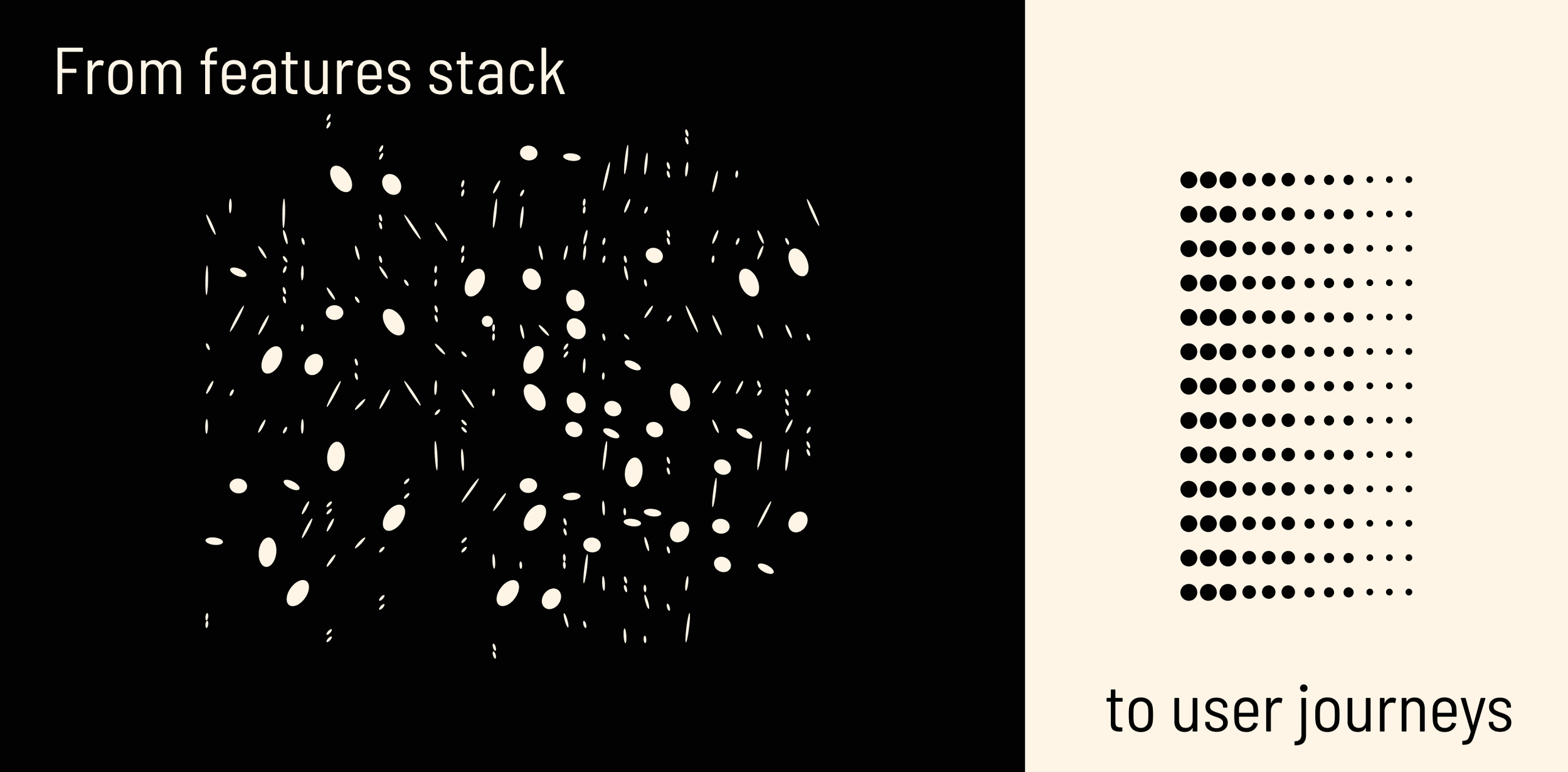
Four sprints & four journeys for one persona: from feature logic to user logic
Brought in alongside a creative studio who handled the rebrand, I led the UX and journey redesign.
We kicked-off with a discovery sprint to synthesise existing user research and align with stakeholders. While we had creative freedom (blue-sky brief), the stakeholders, creative team, and I made one deliberate choice: design depth over breadth. Rather than creating a one-size-fits-all experience, we structured all four weekly sprints around the four core journeys the priority persona needed to complete:
Sign-up and onboarding
Homepage and discovery
Search and job posting
AI assistant and messaging
Why one persona? Home starters were the highest-value, first-time platform users managing multiple jobs. They had the most to gain from a smarter experience and the most to lose from a clunky one.
Their core tensions: confidence in booking an expert, trust, scheduling, secure payment. By designing depth for them, every recommendation directly addressed real friction, not feature wishes.
This meant deprioritising power users (B2B), a clear trade-off we agreed on. It meant every sprint mapped directly to a user task, not a product feature. Every redesign recommendation stayed rooted in actual user intent, instead of the existing feature logic.
I audited each flow using Nielsen's heuristic framework and extensive competitive benchmarking, mapped friction points and opportunities.
Key Recommendations
Some key recommendations included :
A shift from lexical to semantic search to remove the brittleness of exact-match queries.
AI-assisted job description completion, where the assistant would prompt users for missing details, suggest relevant images to upload, and help them publish with confidence rather than abandon mid-flow.
The goal throughout was to close the gap between what the AI could do and what users were actually experiencing.
Outcome
Deliverables were handed to the product team as annotated journey maps, opportunity frameworks, and best-practice references. So it was ready to move straight into prototyping, user testing, and iterative refinement.
Since I wasn't client-facing post-handoff, I unfortunately don't have visibility into post-launch impact. The scope was to deliver strategic UX recommendations rooted in user research, competitive benchmarking, and best practices. A significant portion of those recommendations made it into production, signalling that the proposed direction landed.